
🧪 Anti-Diphtheria Antibody (EIA)
1. Overview of Anti-Diphtheria Antibody Test
The Anti-Diphtheria Antibody (Diphtheria Toxin Antibody) test evaluates immunity against diphtheria, usually acquired through DTaP/Tdap vaccination.
Key points:
- Diphtheria is caused by Corynebacterium diphtheriae producing a potent toxin
- Antibody levels reflect vaccine-induced immunity rather than active infection
- Monitored by WHO to guide immunization programs and high-risk population protection
2. Test Purpose
- Evaluate immunity to diphtheria
- Verify antitoxin formation after DTaP/Tdap vaccination
- Assess vaccination needs for children, adults, and pregnant women
- Check protection in immunocompromised individuals
- Organ transplant recipients
- Cancer patients undergoing chemotherapy
- Primary immunodeficiency patients
- Assess laboratory or clinical risk groups
- Healthcare workers
- Travelers to endemic regions
⚠ Note: This is not a diagnostic test for acute infection. PCR, culture, or Elek toxin assay required for confirmed diphtheria diagnosis.
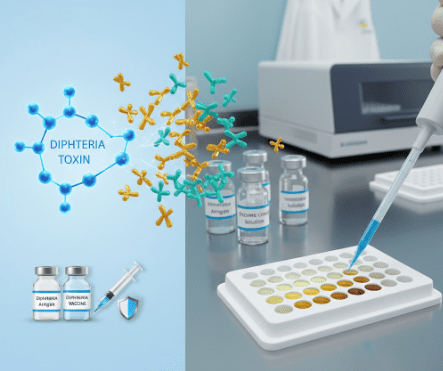
3. Specimen and Test Method (EIA)
Specimen
- Serum
Test Method: Enzyme Immunoassay (EIA)
- Wells coated with diphtheria toxin antigen
- Patient serum added → binds to antigen if antibodies present
- Enzyme-labeled secondary antibody binds → substrate added
- Colorimetric reaction measured → optical density (OD)
- Antibody concentration calculated in IU/mL
Advantages of EIA
- High reproducibility
- Quantitative
- Internationally standardized
4. Reference Ranges (WHO & Manufacturer Guidelines)
| Antibody Level (IU/mL) | Interpretation |
|---|---|
| < 0.01 | No protection |
| 0.01 – 0.09 | Basic/partial protection → booster recommended |
| 0.1 – 0.9 | Protective immunity |
| ≥ 1.0 | Long-term protection |
Note: Values may vary slightly by manufacturer.
5. Clinical Significance
- Verify post-vaccine immunity
- Confirms adequate response to DTaP/Tdap
- Booster recommendation for immunocompromised or adults
- Low antibody levels → consider additional vaccination
- Natural antibody decline over time
- Adults may require Tdap booster
- Not for acute infection diagnosis
- Antibody levels alone do not indicate current infection
6. Factors Affecting Antibody Levels
High Levels
- Recent DTaP/Tdap vaccination
- Recovery from natural infection
- Recent booster dose
Low Levels
- Long interval since last vaccination
- Older age
- Immunocompromised conditions (chemotherapy, steroids, primary immunodeficiency)
- Poor nutritional status
7. Interpretation Considerations
- Not a diagnostic test → antibody presence ≠ active infection
- Antibody wanes over time → immune status may change
- EIA results alone may not reflect vaccination history → verify records
- High antibody levels may still require booster in high-risk populations (e.g., healthcare workers)
- Prior IVIG therapy can artificially raise antibody levels
8. Summary Table
| Item | Key Points |
|---|---|
| Test Name | Anti-Diphtheria Antibody (EIA) |
| Specimen | Serum |
| Principle | Antigen-antibody binding with enzyme colorimetric detection |
| Reference Ranges | <0.01 IU/mL None / 0.01–0.09 Basic / 0.1–0.9 Protective / ≥1.0 Long-term |
| Clinical Use | Post-vaccine immunity assessment, booster recommendations, immunocompromised monitoring |
| Limitations | Not for acute infection diagnosis; results must be interpreted with vaccination history and clinical context |
9. References
- WHO. Diphtheria vaccine: Immunological basis of vaccination
- Galazka A, et al. “Diphtheria: Clinical and laboratory aspects.” Journal of Infectious Diseases
- Efstratiou A & George RC. “Laboratory diagnosis of diphtheria.” Journal of Medical Microbiology
- CDC. Diphtheria: Prevention and Control Guidelines
🧪 Anti-Diphtheria Antibody (EIA) — Complete Guide
Meta Title (SEO)
Anti-Diphtheria Antibody EIA Test — Immunity Assessment, Reference Ranges & Clinical Interpretation
Meta Description (SEO)
Comprehensive guide to Anti-Diphtheria Antibody testing using EIA. Learn test principles, specimen requirements, reference ranges, clinical significance, and interpretation for vaccination and immunity evaluation.
SEO Keywords
Anti-Diphtheria antibody, EIA test, diphtheria immunity, DTaP Tdap, antibody levels, vaccine evaluation, serological testing, diphtheria protection, booster assessment, immunocompromised patient
1. Overview of Anti-Diphtheria Antibody Test
The Anti-Diphtheria Antibody (Diphtheria Toxin Antibody) test evaluates immunity against diphtheria, usually acquired through DTaP/Tdap vaccination.
Key points:
- Diphtheria is caused by Corynebacterium diphtheriae producing a potent toxin
- Antibody levels reflect vaccine-induced immunity rather than active infection
- Monitored by WHO to guide immunization programs and high-risk population protection
2. Test Purpose
- Evaluate immunity to diphtheria
- Verify antitoxin formation after DTaP/Tdap vaccination
- Assess vaccination needs for children, adults, and pregnant women
- Check protection in immunocompromised individuals
- Organ transplant recipients
- Cancer patients undergoing chemotherapy
- Primary immunodeficiency patients
- Assess laboratory or clinical risk groups
- Healthcare workers
- Travelers to endemic regions
⚠ Note: This is not a diagnostic test for acute infection. PCR, culture, or Elek toxin assay required for confirmed diphtheria diagnosis.
3. Specimen and Test Method (EIA)
Specimen
- Serum
Test Method: Enzyme Immunoassay (EIA)
- Wells coated with diphtheria toxin antigen
- Patient serum added → binds to antigen if antibodies present
- Enzyme-labeled secondary antibody binds → substrate added
- Colorimetric reaction measured → optical density (OD)
- Antibody concentration calculated in IU/mL
Advantages of EIA
- High reproducibility
- Quantitative
- Internationally standardized
4. Reference Ranges (WHO & Manufacturer Guidelines)
| Antibody Level (IU/mL) | Interpretation |
|---|---|
| < 0.01 | No protection |
| 0.01 – 0.09 | Basic/partial protection → booster recommended |
| 0.1 – 0.9 | Protective immunity |
| ≥ 1.0 | Long-term protection |
Note: Values may vary slightly by manufacturer.
5. Clinical Significance
- Verify post-vaccine immunity
- Confirms adequate response to DTaP/Tdap
- Booster recommendation for immunocompromised or adults
- Low antibody levels → consider additional vaccination
- Natural antibody decline over time
- Adults may require Tdap booster
- Not for acute infection diagnosis
- Antibody levels alone do not indicate current infection
6. Factors Affecting Antibody Levels
High Levels
- Recent DTaP/Tdap vaccination
- Recovery from natural infection
- Recent booster dose
Low Levels
- Long interval since last vaccination
- Older age
- Immunocompromised conditions (chemotherapy, steroids, primary immunodeficiency)
- Poor nutritional status
7. Interpretation Considerations
- Not a diagnostic test → antibody presence ≠ active infection
- Antibody wanes over time → immune status may change
- EIA results alone may not reflect vaccination history → verify records
- High antibody levels may still require booster in high-risk populations (e.g., healthcare workers)
- Prior IVIG therapy can artificially raise antibody levels
8. Summary Table
| Item | Key Points |
|---|---|
| Test Name | Anti-Diphtheria Antibody (EIA) |
| Specimen | Serum |
| Principle | Antigen-antibody binding with enzyme colorimetric detection |
| Reference Ranges | <0.01 IU/mL None / 0.01–0.09 Basic / 0.1–0.9 Protective / ≥1.0 Long-term |
| Clinical Use | Post-vaccine immunity assessment, booster recommendations, immunocompromised monitoring |
| Limitations | Not for acute infection diagnosis; results must be interpreted with vaccination history and clinical context |
9. References
- WHO. Diphtheria vaccine: Immunological basis of vaccination
- Galazka A, et al. “Diphtheria: Clinical and laboratory aspects.” Journal of Infectious Diseases
- Efstratiou A & George RC. “Laboratory diagnosis of diphtheria.” Journal of Medical Microbiology
- CDC. Diphtheria: Prevention and Control Guidelines